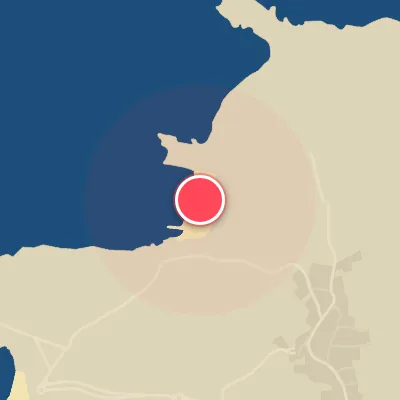
Map
Map
Isla de Santa Marina
Today's Surf Conditions at Isla de Santa Marina
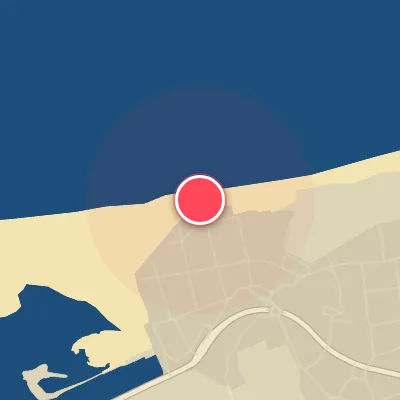
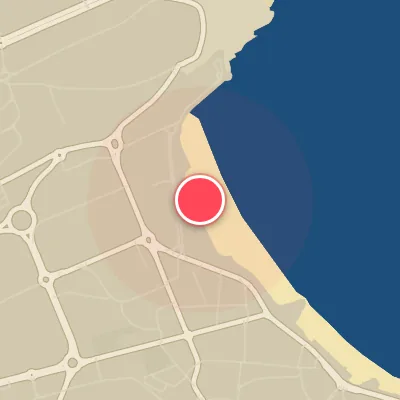
Spot Conditions Map
Hover over the hourly chart columns to update the wind & swell direction overlays on the map.
Today's Surf & Wind Forecast (Hourly)
Loading forecast text...
Spot Overview & Description
Santa Marina, a world-class right-hand reefbreak, peels along the western fringe of Isla de Santa Marina, just off the eastern edge of Playa de Somo. When conditions align, it delivers a muscular, high-performance ride: heaving open faces, long, grinding walls, and legitimate barrel sections that detonate over a rugged, mixed bottom of sand and exposed rock. This is a wave of consequence. At its best, Santa Marina offers world-class quality, but it demands respect—powerful hold-downs and jagged rocks lurking in the whitewater separate the experienced from the overmatched. Not for the faint of heart.
Best Surf Season & Climatology
Best Surf Season (October - March)
The North Atlantic swings into full production during these months, delivering a steady diet of long-period groundswells that march straight into the WNW-facing coastline of Isla de Santa Marina. Average swell heights hover between 1.6m and 2.1m, with periods consistently above 10.5s and often reaching into the powerful 12–14s range. The dominant swell directions — WNW, NW, and NNW — align perfectly with the optimal window, while the offshore wind frequency (from WNW, W, WSW, and SW) peaks around 43–48%. This is when the combination of consistent, powerful swell and favorable thermal gradients creates world-class conditions. Expect pumping, long-period lines that wrap into the bay, especially during negative NAO phases that steer storm tracks southward. The only caveat is the occasional strong onshore flow from the west, but when the synoptic pattern aligns, this is the prime window for big-wave charging and hollow barrel sections.
Fair Surf Season (April - May & September)
As the primary storm track shifts north, swell size and period dial back, but the window remains open for quality sessions. April and May see average heights drop to 1.2–1.5m and periods shorten to 10–10.8s, yet the swell direction stays favorable, with NW and WNW still dominating the waverose. Offshore wind frequencies hold near 40–43%, making for plenty of clean, rippable conditions. September marks the transition back into higher-energy patterns, with average swell climbing to 1.3m and periods increasing to 10.4s, alongside the highest offshore wind probability of the year at 48%. These months are ideal for fun, solid surf in the 1–1.5m range — perfect for groveling to good-sized waves on a longboard or step-up. The trade-off is less consistency, but when a southerly tracking low brushes the coast, you can score some memorable sessions without the crowds.
Low Surf Season (June - August)
Summer settles into a classic low-energy pattern across the Cantabrian Sea. Average swell heights bottom out at 1.0m, with periods averaging 8.9–9.3s — often below the 10s threshold that brings real power. While NW and NNW swell still dominates the chart, the wave heights are predominantly in the 0.5–1m and 1–1.5m ranges, offering small, fun-sized waves suited for groveling or small-wave performance boards. Offshore wind frequencies hold steady around 42–46%, driven by the thermal low-pressure development over the Iberian Peninsula that pulls in light easterlies and southeasterlies during the afternoon. However, these light winds often struggle to clean up the short, choppy swell. The window for quality surf narrows to early mornings before the sea breeze picks up, or when a rare summer cold front sneaks into the Bay of Biscay. It’s a time for low expectations, but if you’re after a laid-back session with longboard glide, the summer lull can still deliver.
Detailed Surf Information for Isla de Santa Marina
Detailed Surf Forecast
Access our detailed 8-day swell and wind forecast charts for Isla de Santa Marina with tidal graphs, period ranges, and daily forecast text summaries.
Swell & Wind Statistics
Explore historical swell consistency, wave heights, and offshore wind windows month-by-month, compiled from over 40 years of data.
Historical Surf Report
Browse the historical database archives to view past wave reports and understand spot climatology during specific years and months.