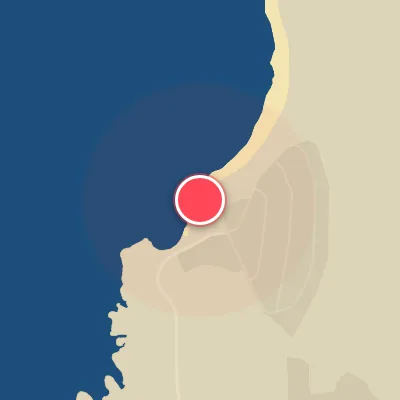
Map
Map
Scarborough
Today's Surf Conditions at Scarborough
Spot Conditions Map
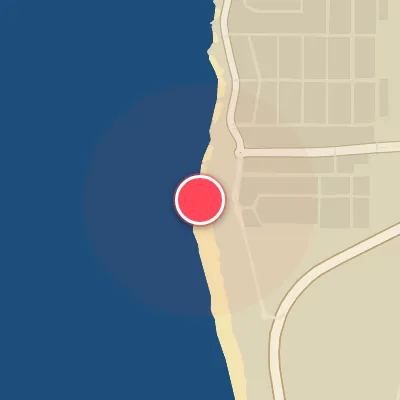
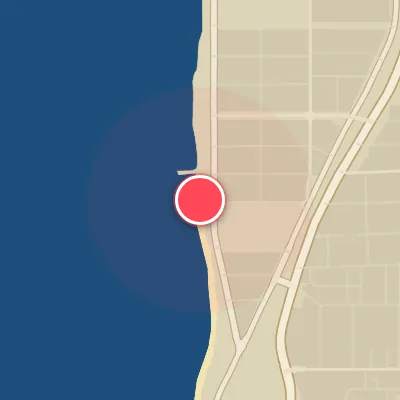
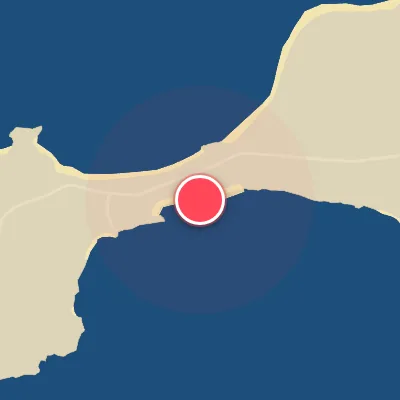
Hover over the hourly chart columns to update the wind & swell direction overlays on the map.
Today's Surf & Wind Forecast (Hourly)
Loading forecast text...
Best Surf Season & Climatology
Best Surf Season (April - September)
As the austral winter sets in, the Indian Ocean roars to life, sending a relentless parade of powerful SW groundswells towards the West Australian coast. Scarborough, with its WSW exposure, sits perfectly in the crosshairs. During these months, the average swell height climbs to a solid 2.2-2.7m, with long period energy frequently exceeding 12 seconds. The key to the season's quality lies in the wind regime: high pressure systems over the Great Australian Bight pump in consistent offshore breezes from the NE to ESE, grooming the waves into clean, lined-up walls. April offers a sweet spot with 39% ideal winds, while May through July push that number above 40%, making morning sessions particularly epic. Expect punchy 1.5-2.5m waves on the sets, with occasional XL days when low pressure systems deepen south of the continent. This is the prime window for Scarborough.
Fair Surf Season (March & October)
The shoulder months bridge the extremes. In March, the swell still carries winter's momentum with an average of 1.8m and period of 12.4s, but the wind becomes more fickle. Ideal offshore conditions occur about 30% of the time, often in the early mornings before the sea breeze kicks in from the S/SW. October sees a similar pattern: the surf remains substantial (2.2m average, 12.8s period) but the wind shifts more frequently to the onshore quadrants, particularly SW and WSW which ruin the wave quality. That said, when a strong ridge sets up, you can score clean, powerful surf with fewer crowds than the peak winter months.
Low Surf Season (November - February)
During the austral summer, the Southern Ocean storm track weakens, and a persistent ridge of high pressure sits over the mainland. Swell heights drop to a smaller but still rideable 1.8-2.0m, with periods hovering around 11-12s – fun-sized but lacking the punch of winter. The real issue is the wind. The prevailing flow turns onshore from the SW and SSW for the majority of the time, chopping up the surface and creating less-than-ideal conditions. Ideal offshore winds occur only 21-25% of the time, typically when a brief southerly buster or a weak front provides a window. Nevertheless, the water is warm, the crowds are smaller, and the occasional morning glass-off can yield clean, rippable waves in the 1-1.5m range. It's not the main event, but there are still diamonds in the rough.
", "monthly_stats": { "january": "January: Summer Doldrums and Onshore Challenges
January at Scarborough is defined by the persistent presence of the subtropical ridge, firmly lodged over the mainland. Swell energy averages 1.9m with a period of 11.6s – likely from distant Southern Ocean storms that barely make the jump north. The dominant swell directions are SW (47.5%) and SSW (33.7%), both ideal for Scarborough's WSW exposure, but the problem is the wind. Onshore flow from the S and SSW dominates, with SSW 24.9% and S 14.5% of the time, frequently in the 20-40kph range. Ideal offshore winds (NE to ESE) total only about 25% (E 8.9%, ESE 12.1%, SE 9.5% etc), but most of those are light to moderate. The result is that when a clean window opens – typically early morning before the seabreeze kicks in – the waves are punchy and rippable, but the majority of the time you're dealing with wind-chopped, crumbly faces. The best bet is to target mornings with a strong SE-ESE gradient behind a passing high.
", "february": "February: Holding at 1.8m – Waiting for a Clean Window
February remains locked in summer pattern, with the average swell height dipping slightly to 1.8m but the period increasing to 11.8s. Swell direction is even more dominated by SW (44.9%) and SSW (33.3%), good news for the peak. However, the wind statistics show a slight uptick in ideal offshore conditions to 25%, thanks to a modest increase in E (12.3%) and ESE (13.6%) winds. Still, the onshore S and SSW components account for over 33% combined, often with moderate speeds. The wave heights in the 1-2.5m range are solid – approximately 60% of all swell falls in that band – so the potential is there. But you need to pick your moments: a strong high moving across the Bight can set up a clean E flow, grooming 1.5-2.5m SW swell into glassy, roping lines. Without that, it's a low-percentage game.
", "march": "March: Autumn Transition – Glimmers of Winter Power
March is the turning point. The average swell holds at 1.8m, but the period climbs to 12.4s – a sign that the storm track is awakening. Swell direction broadens slightly: SW (50.3%) remains king, with SSW (27.7%) and WSW (3.9%) also contributing. The wind regime shows a marked improvement: ideal offshore winds (NE to ESE) now account for about 38% of the time (E 12.8%, ESE 13.5%, ENE 6.1%, NE 2.2% etc), while onshore S/SSW drops to ~27%. This translates to 30% ideal wind conditions overall, often in the morning. The waves become more consistent and powerful, with head-high to overhead sets firing down the line when the offshore breeze holds. March is the month when you can start scoring quality sessions without the winter crowds – the atmosphere is still warm, but the ocean is delivering winter-like pulse.
", "april": "April: The Tides Turn – Winter Surge Begins
April marks the true onset of winter. Average swell height jumps to 2.0m and period to 12.7s, driven by intensifying lows in the Southern Ocean. The swell direction is heavily weighted towards SW (52%) and WSW (10.8%), which are the optimal angles for Scarborough. Winds take a favourable turn: ideal offshore flow (NE to ESE) totals roughly 45% (E 12%, ESE 10.6%, ENE 8.5%, NE 3.6% etc), with a notable decrease in onshore SSW winds (11.1%). The percentage of ideal wind conditions reaches 39%. The result is frequent mornings with clean, lined-up groundswell in the 1.5-2.5m range – prime conditions for both shortboarding and log riding. The ocean is delivering consistent power, and the wind is often co-operative. April is a prime month for Scarborough, offering the best balance between size and quality.
", "may": "May: Peak Autumn – Optimal Winds and Solid Swell
May is statistically the sweet spot. Average swell height rises to 2.2m with a long 12.7s period. Swell direction is still predominantly SW (42.1%) but with a significant increase from WSW (16%) and W (3.7%) – all optimal. The wind picture is the best of the year: ideal offshore winds (NE to ESE) comprise roughly 45% of the total (ENE 10.8%, E 11.7%, ESE 8.2%, NE 7.2%, NNE 4.3%, N 3.7% etc), and the onshore S/SSW drops to just 13.2%. The overall ideal wind percentage hits 46%. That means nearly half the time the wind is blowing cleanly offshore, grooming the abundant swell into pristine walls. Expect frequent sessions with head-high to double overhead sets, long period lines, and minimal chop. If you can only surf one month at Scarborough, make it May.
", "june": "June: Deep Winter – Pulsing SW Groundswells
June plunges into deep winter mode. Average swell height soars to 2.5m, period to 12.8s. The dominant swell directions shift further west: SW (27.2%) and WSW (16%) are the main players, with notable contributions from W (4.5%) and WNW (2.3%). These west-tilted directions are excellent for Scarborough, wrapping well into the bay. Wind patterns remain favourable for surfing: ideal offshore flow (NE to ESE) accounts for about 41% of the time (NE 9%, ENE 10.3%, E 9.8%, SE 4.5% etc), keeping the ocean glassy despite the large swell. The ideal wind percentage is 43%. However, onshore winds from W and WSW also pick up (WSW 5.6%, W 6.5%, WNW 5.7%) – these can ruin conditions if they set in. The real challenge in June is the size: when a strong low-pressure system stalls south of WA, you can see waves easily exceeding 2.5m, bordering on XL for this coast. It's a month for experienced surfers who can handle powerful, heavy waves. Morning sessions with
Detailed Surf Information for Scarborough
Detailed Surf Forecast
Access our detailed 8-day swell and wind forecast charts for Scarborough with tidal graphs, period ranges, and daily forecast text summaries.
Swell & Wind Statistics
Explore historical swell consistency, wave heights, and offshore wind windows month-by-month, compiled from over 40 years of data.
Historical Surf Report
Browse the historical database archives to view past wave reports and understand spot climatology during specific years and months.