
Ultimate El Salvador Surf Guide: Seasons, Right-Hand Points & Wave Meteorology
Seasons, coastal bathymetry, world-class right-hand points & wave meteorology
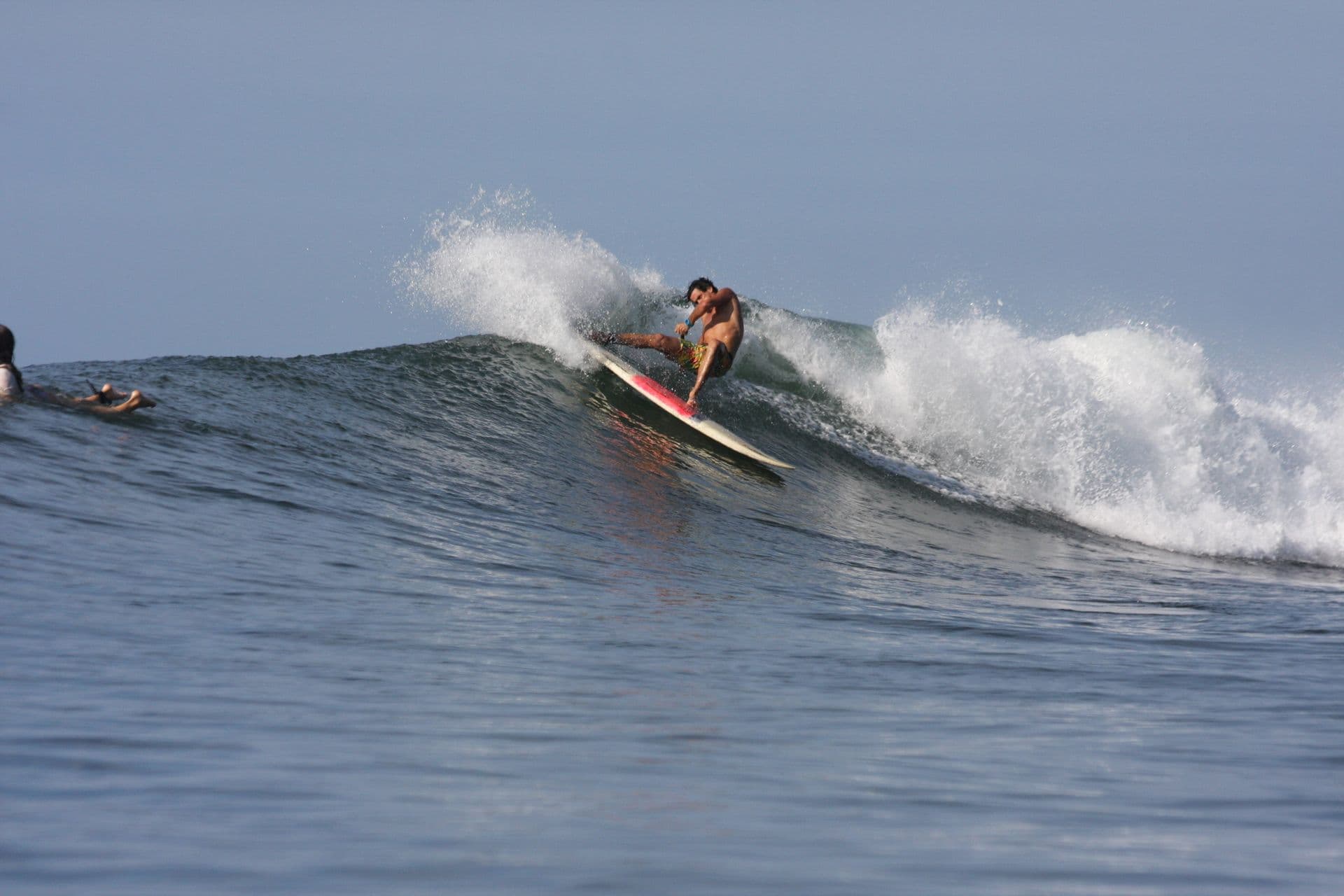
El Salvador is Central America's premier pointbreak paradise. Nestled along the Pacific coastline with a south-to-southwest orientation (180° to 209°), this volcanic nation is globally renowned as the "Land of Right-Hand Pointbreaks." Its coastline features dramatic cliffs, cobblestone boulder setups, black volcanic sandbars, and lush tropical estuaries. From the freight-train speed barrels of Punta Roca in La Libertad and the legendary longboard walls of Sunzal, to the high-performance rivermouth ramps of La Bocana and the secluded setups of Mizata and K59, El Salvador delivers warm water and machine-like wave consistency year-round.
Blessed with an unobstructed swell window to the vast South Pacific Ocean, El Salvador intercepts long-period groundswells generated thousands of nautical miles away in the Roaring Forties and Southern Ocean. Whether you are hunting double-overhead summer barrels or seeking clean, mellow peeling point waves during the dry winter trade winds, understanding El Salvador's distinct swell seasons, coastal bathymetry, and meteorological wind patterns is key to scoring world-class surf.
El Salvador Surf Seasons: Meteorological Breakdown
El Salvador's surf climate is governed by the Southern Hemisphere storm track across the South Pacific and the seasonal migration of the Intertropical Convergence Zone (ITCZ), creating a classic tropical dry/wet seasonal cycle.
Peak Season
Dry Season
1. Best Surf Season: Southern Hemisphere Winter & Wet Season (May - October)
- Wave Heights: 4.4-4.7ft (1.3-1.4m) open-ocean average; standout point breaks regularly pump at 6.0-10.0ft+ (1.8-3.0m+) on solid pulses.
- Groundswell Consistency: 80% - 98% (peaking at 98% in May and 94% in June).
- Wind Patterns: Favourable offshore morning winds (North/NNE drainage from the volcanic cordillera) averaging 49%-63%, followed by light afternoon sea breezes and evening convective showers.
- Meteorology: Intense deep-low cyclones track between New Zealand, Antarctica, and Chile, pushing relentless SSW groundswells with periods of 14-20 seconds into El Salvador's coastline. Tropical rains reshape rivermouth sandbars, creating hollow, wedging setups.
- Experience Level: Intermediate, Advanced, and Tube Hunters.
- Highlights: Pumping sessions at Punta Roca, dredging heavy lefts at La Bocana, solid walls at K59 and El Zonte, and the mid-summer dry spell ("La Canícula") in July with 63% favourable wind.
Time to Go Surfing – find the perfect package in El Salvador
Discover top-rated surf camps, local surf schools, and relaxing yoga retreats across El Salvador.
2. Fair / Transition Season: Spring & Early Autumn (March - April & November)
- Wave Heights: 3.7-4.1ft (1.1-1.2m) average.
- Groundswell Consistency: 84% - 99% (April delivers a remarkable 99% groundswell reliability).
- Wind Patterns: Strong morning offshores, light afternoon glass-offs, transitioning weather patterns.
- Meteorology: April marks the beginning of the South Pacific swell engine, delivering near-constant groundswell before heavy rains commence. November brings the arrival of the dry season, clearing skies, lower humidity, and a surge in offshore wind reliability up to 67%.
- Experience Level: All levels (Beginner to Advanced).
- Highlights: April offers the highest swell consistency with moderate winds, while November delivers crystal-clear water, lush emerald landscapes, and flawless grooming offshore breezes.
3. Low Surf Season: Dry Season / "Verano" (December - February)
- Wave Heights: 3.2-3.4ft (1.0m) average; pointbreaks deliver user-friendly 3.0-5.0ft (0.9-1.5m) faces.
- Groundswell Consistency: 82% - 90%
- Wind Patterns: Peak offshore wind consistency of the entire year (60% - 69% favourable wind rate across the region).
- Meteorology: Stable high pressure dominates Central America, producing bone-dry conditions (precipitation drops to 0.1-0.3 mm/day), endless sunshine, and consistent Northerly offshore drainage winds that keep lineups glassy well into the midday hours.
- Experience Level: Beginners, Longboarders, and Progressive Intermediates.
- Highlights: Flawless, peeling right-hand lines at Sunzal and El Zonte without punishing current or heavy wipeouts; lively beach town vibes in El Tunco.
Standout Surf Spots & Hidden Gems
El Salvador packs world-class density into a compact strip of coastline along the department of La Libertad and beyond.
1. Punta Roca (La Libertad) - The Crown Jewel of Central America
- Wave Type: Cobblestone boulder right pointbreak
- Optimal Swell: SSW / SW groundswell (handles 3-12ft / 0.9-3.6m)
- Optimal Wind: Light North / NNE (Offshore)
- Optimal Tide: All tides (Low tide is faster and more hollow; high tide fills out the walls)
- The Lowdown: Punta Roca is a global surfing icon, drawing comparisons to Jeffrey's Bay for its speed, length, and section transitions. Taking off next to the famous "Mama Roca" boulder, the wave throws a critical initial tube section before opening up into hundreds of meters of steep, rippable walls down the point. It demands strong paddling fitness and sharp tube-riding skills when solid south groundswells hit.
2. Sunzal (El Tunco) - The Ultimate Pointbreak Canvas
- Wave Type: Deep-water boulder right pointbreak
- Optimal Swell: SSW / S groundswell (handles 3-10ft / 0.9-3.0m)
- Optimal Wind: North / NNE (Offshore)
- Optimal Tide: Low to Mid tide
- The Lowdown: The beating heart of Salvadoran surf culture, Sunzal is a swell magnet that breaks consistently even when the rest of the coast is small. Its long, slopey walls wrap smoothly around the headland, offering expansive shoulders for carves, cutbacks, and classic noserides. It is equally friendly for longboarders and progressing intermediates, yet turns into a powerful, deep-water arena on overhead swells.
3. La Bocana (El Tunco) - The High-Performance Rivermouth Left
- Wave Type: Rivermouth cobblestone / sandbar A-frame
- Optimal Swell: SSW / SW swell (3-7ft / 1.0-2.1m)
- Optimal Wind: Northeast (Offshore)
- Optimal Tide: Mid to High tide
- The Lowdown: Located across the rivermouth from Sunzal in El Tunco, La Bocana is El Salvador's premier left-hander. Breaking over a mixture of smooth river stones and sandbars, it provides a steep, hollow takeoff, immediate barrel sections, and a rippable shoulder with ramp sections ideal for progressive aerial maneuvers. The wave shifts subtly after heavy wet-season river flows.
4. Hidden Champion: Mizata (Western Coast)
- Wave Type: Multi-peak beachbreak, point, and reef slab
- Optimal Swell: SSW / SW groundswell (3-7ft / 0.9-2.1m)
- Optimal Wind: North (Offshore rate: up to 65% in July and 69% in December)
- Optimal Tide: Low to Mid tide (Point); Mid to High tide (Tweeners)
- The Lowdown: Located an hour west of La Libertad on a secluded dark-sand coastline, Mizata is an uncrowded haven. Featuring four distinct setups-The Point (a punchy right-hander), Tweeners (fun beachbreak lefts and rights), and The Slab (a heavy, hollow right-hand ledge)-Mizata catches swell energy when other spots struggle. With a relaxed vibe and consistent 50%-69% favourable winds throughout the year, it is the premier off-the-radar destination in El Salvador.
Regional Breakdown: El Salvador's Surf Geography
El Salvador's Pacific coastline offers distinctive zones characterized by varying geological structures, wave personalities, and crowd dynamics.
Central Coast
La Libertad Hub
El Tunco & Costa del Bálsamo
Epicenter of Variety
Western Points
La Libertad West to Sonsonate
Oriente Salvaje
Wild East / San Miguel
Central Coast & La Libertad Epicenter
The La Libertad region is the administrative and cultural core of surfing in El Salvador. Anchored by Punta Roca, the coastline here features rugged cobblestone headlands that wrap Southern Ocean swells into long, mechanical walls. Nearby beachbreaks such as San Blas, Conchalío, and Cocal provide punchy, fast-breaking alternatives for surfers seeking high-action shorebreak peaks.
Costa del Bálsamo & Western Points
Stretching west along the scenic coastal highway, the Costa del Bálsamo offers unmatched density. El Tunco is the vibrant center, housing both Sunzal and La Bocana. Further west lies El Zonte, known for its bohemian atmosphere and versatile right pointbreak, followed by the gated enclave of K59 (a fast, hollow right boulder point) and the secluded sanctuary of Mizata.
Ocean Conditions & Surfer Essentials
- Water Temperatures: Tropical warmth year-round, ranging consistently between 27°C and 30°C (81°F-86°F). Boardshorts, rashguards, and bikinis are the daily standard 365 days a year. A 1mm neoprene top can be useful during stiff offshore morning breezes in January and February.
- Tidal Dynamics: El Salvador experiences semi-diurnal tides with ranges between 1.5 and 2.5 meters (5-8ft). Many boulder pointbreaks (like Punta Roca and K59) get shallow and fast at low tide, while rivermouths and beachbreaks (like La Bocana and Tweeners) favor the incoming mid-to-high tide push.
- Seafloor & Hazards: Most premier points break over rounded volcanic cobblestones and boulders. Watch for sea urchins on rocky shelves and use caution when navigating entry and exit keyholes (such as "Mama Roca" at Punta Roca or boulder shelves at K59). Strong rip currents are common during major Southern Ocean swell pulses.
Year-Round Surf Summary
With an average groundswell prevalence rarely dipping below 80% and offshore wind reliability reaching up to 69% in the dry season, El Salvador ranks among the most consistent surf destinations in the world. Whether you are charging heavy overhead tubes at Punta Roca in June, enjoying endless warm-water rights at Sunzal in November, or escaping the crowds at Mizata in February, El Salvador delivers an unforgettable tropical surf journey.